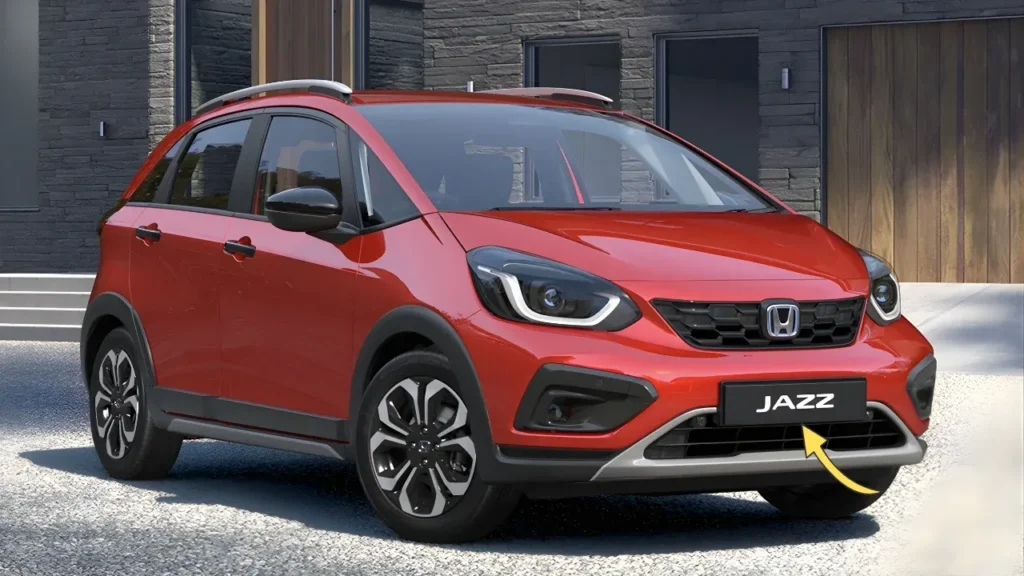
The Honda Jazz continues to attract strong buyer interest in January 2026, despite being officially discontinued in India in late 2023. What was once a slow but steady seller in the premium hatchback segment has now transformed into one of the most desirable used cars in its category. Thanks to its refined petrol engine, unmatched cabin flexibility, and long-term reliability, the Jazz has carved out a loyal following that refuses to fade even years after production ended.
Discontinuation Has Strengthened Honda Jazz Resale Value
Honda discontinued the Jazz in December 2023 as part of a broader strategy to streamline its Indian portfolio and concentrate on sedans and SUVs. While the decision initially disappointed existing owners and fans of the model, it has had an unexpected upside. The Jazz is now viewed as a proven, no-nonsense premium hatchback with no direct replacement offering the same balance of space and reliability.
As of January 2026, well-maintained 2020–2023 Honda Jazz models are commanding resale prices between ₹7.5 lakh and ₹9.5 lakh, depending on variant, condition, and mileage. These figures often overlap with the prices of brand-new mass-market hatchbacks, yet many buyers are willing to pay the premium for the Jazz’s superior cabin quality and long-term peace of mind.

1199cc i-VTEC Engine Still Feels Refined and Dependable
At the core of the Jazz’s appeal is Honda’s trusted 1199cc i-VTEC petrol engine. This naturally aspirated four-cylinder unit produces 89 bhp and 110 Nm of torque, delivering smooth power delivery and predictable performance. Unlike many modern small-capacity turbo engines, the i-VTEC is known for its linear response and low maintenance requirements.
Buyers can choose between a five-speed manual gearbox and a CVT automatic. The CVT variant remains especially popular in urban environments due to its relaxed driving nature and seamless acceleration. Real-world fuel efficiency averages around 14 kmpl in city driving, with highway figures improving noticeably when driven at steady speeds.
Magic Seats Make Honda Jazz a Practical Benchmark
One of the biggest reasons behind the Jazz’s cult-like following is Honda’s innovative Magic Seats system. Despite its compact footprint, the Jazz offers interior flexibility that few hatchbacks can match even today.
The rear seats can be folded, tumbled, or configured vertically to create up to 891 litres of usable cargo space. This makes it easy to carry large suitcases, bicycles, musical instruments, or professional equipment without hassle. For families and urban professionals alike, this level of versatility remains a major selling point.
Comfort and Features Still Feel Premium in 2026
Even by current standards, the Jazz does not feel outdated when it comes to comfort and convenience. Higher variants are equipped with a 7-inch touchscreen infotainment system supporting Android Auto, paired with a six-speaker audio setup that delivers clear and balanced sound quality.
Other notable features include automatic climate control with rear AC vents, push-button start, keyless entry, a leather-wrapped steering wheel, and steering-mounted controls. The cabin benefits from large windows and a well-designed dashboard layout, creating an airy and comfortable driving environment with excellent outward visibility.

Safety Equipment Inspires Long-Term Confidence
Safety has always been a strong focus for Honda, and the Jazz reflects this philosophy clearly. The car comes equipped with six airbags, ABS with EBD, vehicle stability assist, and hill-start assist, offering solid protection for occupants.
Additional features such as a rear parking camera with guidelines, tyre pressure monitoring system, and LED projector headlamps further enhance daily usability. The Jazz’s predictable braking performance and stable handling continue to earn praise from owners, especially when compared to some newer rivals that prioritize features over fundamentals.
Variants and Ownership Costs in 2026
In the used car market, the V manual variant is often considered the best value proposition, offering essential features and alloy wheels at a relatively accessible price point. For buyers seeking maximum convenience, the ZX CVT variant remains the most desirable, adding premium touches and advanced driver assistance features.
Ownership costs remain reasonable even in 2026. Average annual service expenses typically stay around ₹7,000, and Honda’s strong service network ensures easy availability of spare parts. This reliability factor plays a crucial role in maintaining buyer confidence long after discontinuation.
How Honda Jazz Stands Against Modern Rivals
While newer hatchbacks may offer turbocharged engines or aggressive styling, the Jazz excels in areas that directly impact everyday ownership. Its smooth petrol engine, well-damped suspension, and excellent noise insulation make it a relaxed and comfortable daily driver.
Many competitors still struggle to match the Jazz’s combination of interior space, ride comfort, and cargo flexibility. For buyers who prioritize practicality, reliability, and long-term value over visual flair, the Honda Jazz continues to be a smart and sensible choice in 2026.

Hi, I’m Akshay Malhotra, the founder and author of Faros. I created this platform to share my interest in smartphones and automobiles with people who want clear, honest, and easy-to-understand information. I enjoy researching new smartphone launches, car and bike updates, specifications, pricing, and real-world features that actually matter to users. My focus is always on writing original and unbiased content that helps readers make better decisions without confusion.